


 中文简体
 عربى
Content
Your order book says jacquard: a diamond-pattern sweater in three colors, a shoe upper with a seamless toe, or a collar with a logo knitted directly into the trim. The old way meant punch cards, mechanical chains, or manual needle changes. The practical answer for a modern factory is a computerized jacquard knitting machine, which reads a digital pattern and controls each needle independently. That single change shortens sampling, cuts waste, and makes pattern edits possible in minutes instead of days. For most knitwear manufacturers, moving to computer-controlled jacquard flat knitting is not just a label change; it changes which orders you can accept and how fast you can ship them.
What a Computerized Jacquard Knitting Machine Does
A computerized jacquard knitting machine is a flat knitting machine that uses electrically controlled needle selection to create patterns in the fabric. The word "jacquard" originally referred to the punched-card loom used in weaving, but in knitting it now describes any system that lets each needle act independently based on pattern data. A modern machine stores those data digitally, so you can edit a pattern on a screen, send it to the machine, and start a sample within the same shift.
Because every needle is independent, the machine can produce large repeats, small logos, and mixed stitch structures without stopping. It also combines needle selection with multiple yarn feeders to create multi-color jacquard, fair isle, and textured effects. Unlike a jacquard loom, which weaves warp and weft threads, a jacquard knitting machine forms loops, so the finished cloth keeps the stretch and softness that garments and shoe uppers need. That distinction matters when you are comparing machines from different industries or suppliers.
Direct Selection vs Pre-Selection: Needle-by-Needle Control
The main technical choice when buying a computerized jacquard flat knitting machine is how the needle selection system works. Two approaches dominate the market: direct selection and preselected systems. Both are programmable, but they differ in response, precision, and typical use.
In a direct selection machine, an actuator acts directly on the selected needle. The control system sends a signal to a piezo or electromagnetic element, which moves the needle butt into an active position. This method gives precise, fast selection and is well suited to complicated patterns with frequent direction changes. In a pre-selected system, the pattern is first written into selector jacks or mechanical memory elements. When the carriage moves, the preselected data is transferred to the needles. This approach is often preferred for high-volume production because the selection sequence can be repeated very consistently, and the mechanical arrangement is straightforward to maintain.
| Feature | Direct Selection | Pre-Selection |
|---|---|---|
| Pattern flexibility | Very high; every needle can be individually changed every row | High; ideal for repeat orders and stable patterns |
| Typical speed | Precision-oriented; can be tuned for complex patterns | Fast and consistent for standard jacquard repeats |
| Maintenance focus | Actuators and electronic components need regular checks | Selector jacks and mechanical parts need cleaning and wear checks |
| Best applications | Fashion knitwear, fine gauges, multi-color jacquard | Sweaters, shoe uppers, collars, mass-produced trims |
For a factory that runs frequent style changes, a direct selection double system full inserted needle plate computerized flat knitting machine is worth testing on your own production. The full inserted needle plate provides a stable needle bed and helps keep fabric quality even when the pattern is dense.
 Wholesale Direct selection double system full inserted needle plate computerizedZhejiang Tongtai Intelligent Technology Co., Ltd is China Wholesale Direct selection double system full inserted needle plate computerize...View Product →
How System Count and Yarn Feeders Shape Production
System count refers to the number of knitting cam systems on the carriage. A single-system machine has one set of cams; double-system and three-system machines have two or three. The more systems a machine has, the more rows it can knit in a single carriage traverse, which directly reduces knitting time on normal fabric. On a double-system machine, the carriage can complete two courses per pass, which is why sweater production treats double systems as the default. A three-system machine takes that further, though the usable number of systems can depend on the pattern and yarn feeder setup. For jacquard work, extra systems also change how color blocks and floats are managed.
Yarn feeders are equally important. Computerized machines let you control the feeder sequence, and a machine with more feeders supports more colors in a row. Smart yarn feeders can also improve tension control and reduce the amount of yarn used when a color changes, which is a real cost factor in patterned knitwear.
In sweater production, a preselected double system computerized flat knitting machine sweater machine is the classic choice for factories that need a balance of cost, speed, and pattern capability. On the shoe-upper side, a preselected three system fly knit shoe upper computerized flat knitting machine uses the extra system to keep up with the dense, low-stretch structures required by athletic footwear. Both machines run jacquard patterns, but the way they use their systems is matched to the product.
 Wholesale Pre-selected three system fly knit shoe upper computerized flat knittiZhejiang Tongtai Intelligent Technology Co., Ltd is China Wholesale Pre-selected three system fly knit shoe upper computerized flat knitt...View Product →
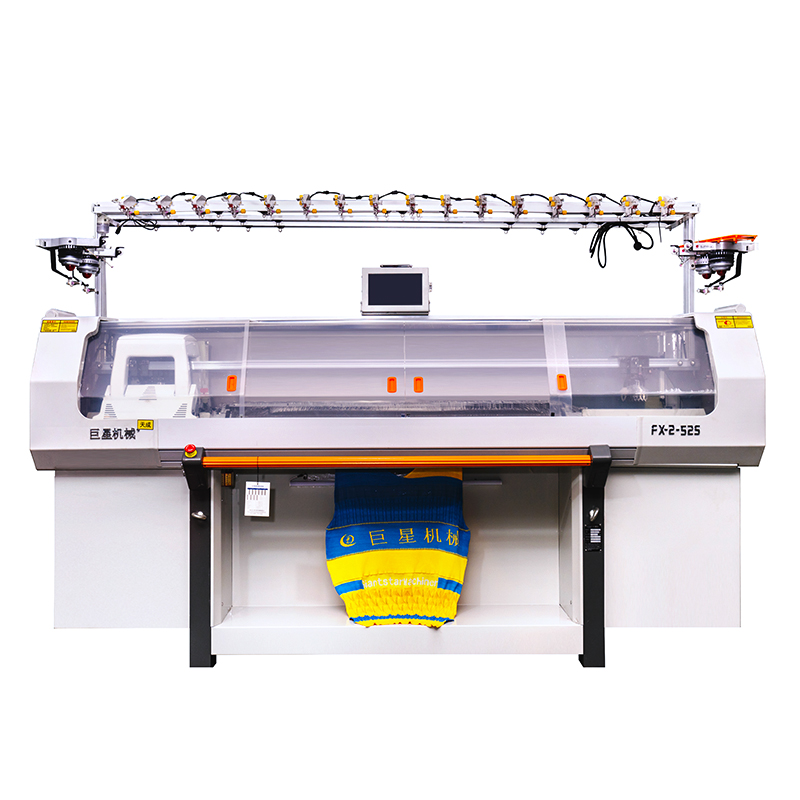 Wholesale Pre-selected double system computerized flat knitting machine (sweaterZhejiang Tongtai Intelligent Technology Co., Ltd is China Wholesale Pre-selected double system computerized flat knitting machine (sweate...View Product →
Matching the Machine to Your Product Mix
The term "computerized jacquard knitting machine" covers a broad product family. If you mainly produce collars, cuffs, and small trims, a collar-focused direct-selection machine saves space and cost. If you knit full garments, a sweater machine with preselected double systems gives you a proven workhorse. For fly-knit shoe uppers, three-system preselected machines with smart yarn feeders are common because they combine structural stability with production speed.
You should also think about whole-garment knitting, which is becoming more interesting because it eliminates sewing processes. Whole-garment flat knitting machines use the same jacquard needle selection principles but add specialized knitting techniques and additional needle beds. They are not necessary for every factory, but they are worth reviewing if you want to move into seamless knitwear. If you are still evaluating which machine class suits your factory, a garment flat knitting machine checklist can help you structure the comparison.
Buying Considerations That Matter in Practice
Beyond the selection system, the machine’s needle plate, gauge, control software, and build quality determine how well the jacquard pattern transfers into stable fabric. The needle plate must be rigid enough to keep the needle spacing consistent across wide widths. Gauge, measured in needles per inch, has to match your yarn count and the density you want. A 12-gauge machine is common for medium-weight sweaters, while 14-gauge handles finer yarns and 7-gauge supports chunkier knits. Choosing the wrong gauge can mean endless tension adjustments and poor fabric hand. The control system should be easy to learn, because pattern editing is what makes a computerized machine pay off.
Supplier experience also matters. Giant Star Machinery has been selling flat knitting equipment under its own brand for more than 12 years and makes core components in-house. The company runs a 24-hour factory test on each machine before shipment and reports OEKO certification as part of its product safety profile. That kind of builder-level knowledge becomes useful when you need to discuss spare parts or adapt a machine to a new product. You can see the full machine range directly on the Giant Star Machinery website.
Choose the needle selection system that matches your pattern mix, not just the upfront price. Direct selection gives you the greatest control for complex jacquard designs, while preselected systems help you produce repeat orders efficiently. The right machine is the one that runs your yarn, your patterns, and your production schedule with the least downtime. If you keep the total fabric quality in view, a computerized jacquard knitting machine is a reliable investment for the next phase of your factory.





