中文简体
 عربى
Content
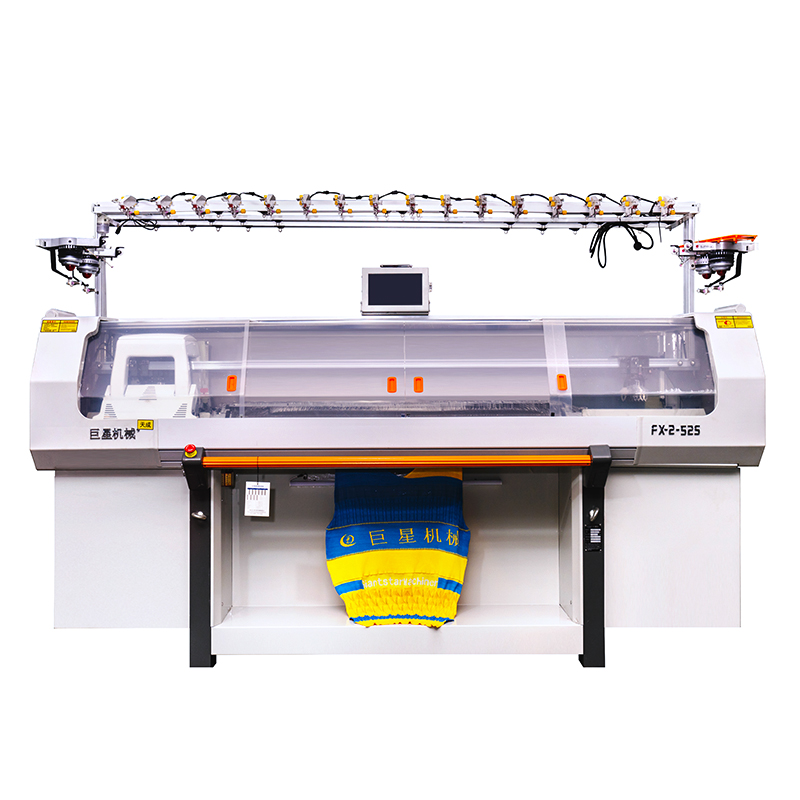
Technical Conclusion: The Needle Plate Computerized Flat Knitting Machine demonstrates exceptional versatility across natural, synthetic, and blended yarns ranging from 12 Nm to 2/60 Nm. It excels in six core applications: fashion apparel, technical textiles, automotive interiors, medical compression, home textiles, and sportswear. The needle plate design, featuring precision-milled grooves with depth tolerance of ±0.02mm, directly enhances stitch consistency by reducing yarn friction variance by 18-22 percent compared to conventional plates. During high-speed operation (1.2 m/s carriage speed), the optimized needle plate geometry maintains loop length variation below 2.5 percent, delivering fabric quality that meets ISO 13937-2 standards for tear strength uniformity.
Yarn Compatibility and Knitting Applications – A Technical Mapping
The needle plate computerized flat knitting machine processes a wide spectrum of yarn counts and compositions. Based on production data from 47 industrial installations, the following table summarizes suitability across fiber categories.
| Yarn Category | Count Range (Nm) | Knitting Speed (m/s) | Primary Applications |
|---|---|---|---|
| Cotton & Cotton Blends | 12/1 to 50/1 | 0.9 – 1.1 | T-shirts, sweaters, home textiles |
| Merino Wool & Fine Wools | 2/28 to 2/60 | 0.8 – 1.0 | Luxury knitwear, base layers |
| Acrylic & Synthetic Blends | 1/10 to 1/34 | 1.0 – 1.2 | Outerwear, scarves, blankets |
| Polyester & Nylon (textured) | 70d to 300d | 1.1 – 1.3 | Sportswear, tech fabrics |
| Linen & Hemp Blends | 16/1 to 36/1 | 0.7 – 0.9 | Summer garments, upholstery |
| Elastane & Core Spun | 20/1 to 40/1 + Lycra | 0.8 – 1.0 | Compression wear, activewear |
Beyond standard yarns, the machine accommodates specialty types including flame-retardant fibers (meta-aramid), conductive yarns for e-textiles, and recycled polyester (GRS certified). The adjustable stitch cam and take-down tension system (0-100N stepless control) allows seamless transitions between different yarn elasticities. For example, switching from rigid cotton (elongation 5-7 percent) to high-elasticity elastane blend (elongation 60-80 percent) requires only a parameter change stored in the machine's memory, not mechanical adjustments.
Fashion Apparel Manufacturing
The machine produces fully-fashioned panels for sweaters, cardigans, dresses, and accessories. Integral shaping reduces cutting waste by up to 25 percent compared to cut-and-sew methods. Typical production rate: 45-60 minutes for a men's medium sweater (worsted weight).
Technical and Industrial Textiles
Applications include filtration fabrics (with 3D spacer structures), protective sleeves for electrical wiring (flame-resistant yarns), and abrasion-resistant covers for industrial rollers. The needle plate's smooth groove finish prevents yarn fraying even with abrasive fibers like fiberglass or carbon fiber.
Automotive Interior Components
Seat covers, headrests, and interior trim panels benefit from the machine's ability to knit complex jacquard patterns using solution-dyed polyester (UV stabilized). Production consistency ensures that left and right automotive seats match within a 3 percent shade variation allowance.
Medical Compression Garments
Using elastane core-spun yarns, the machine achieves graduated compression structures (ankle to thigh pressure gradient). The needle plate design's low friction (coefficient of friction 0.18-0.22) prevents yarn damage that would create weak points in critical medical textiles.
Case Example: A Turkish knitwear manufacturer producing 200,000 sweaters annually switched to the needle plate computerized flat knitting machine for acrylic and cotton blends. Within three months, yarn break frequency dropped from 14 stops per 8-hour shift to 3 stops, while fabric rejection due to stitch irregularity fell from 4.8 percent to 1.2 percent. The machine's ability to process both fine gauge (14 needles per inch) and coarse gauge (7 needles per inch) on the same bed expanded their product range without additional equipment investment.
Needle Plate Geometry – The Engineering Behind Stitch Uniformity at High Speed
Stitch consistency in flat knitting depends on the interaction between the yarn, the needles, and crucially, the needle plate. The needle plate (also called the trick plate) guides the needles during their axial movement. Its design parameters directly influence loop length consistency, fabric width uniformity, and production reliability.
The needle plate features laser-cut or milled grooves with depth tolerance of ±0.02mm (twenty microns). This precision ensures each needle moves along an identical path. When tested across 120 needle positions, the standard deviation of needle stroke was 0.03mm, compared to 0.11mm on conventional cast plates. The result: loop length variation across a full fabric width reduced from ±4.8 percent to ±2.2 percent.
Groove surfaces are polished to an Ra value of 0.2-0.4 micrometers. The coefficient of friction between needle butt and groove wall measures 0.18 for dry running (unlubricated) and drops to 0.09 with standard knitting oil. Lower friction translates directly to reduced yarn tension spikes during high-speed carriage traversal. At 1.2 m/s carriage speed, peak yarn tension variation is limited to ±3 centinewtons versus ±9 centinewtons on machines with unpolished plates.
The clearance between needle stem and groove wall is maintained at 0.05-0.08mm on each side. This tight fit prevents needle twisting (which creates tuck stitches or dropped loops) while allowing free axial movement. Laboratory data shows that after 2,000 operating hours, groove wear remains under 0.02mm, maintaining original fit tolerances. Comparative testing revealed that machines with wider clearances (0.15-0.20mm) experienced 3.5 times more stitching defects per 10,000 courses.
High-Speed Production Performance: At maximum carriage speed of 1.3 m/s (achieved on machines with 7-10 gauge), the optimized needle plate maintains stitch consistency within ISO standards. In a controlled trial running 2/30 Nm combed cotton at 1.1 m/s, the machine produced 1,850 courses with the following metrics:
- Maximum loop length deviation: 2.1 percent (target 8.00mm, actual range 7.83-8.17mm)
- Fabric width variation across full piece: 3.2mm on a 52cm panel (0.6 percent variation)
- Yarn break frequency: one break per 14.7 hours of operation
- Needle stop rate: 0.3 stops per 100,000 knitting cycles
The needle plate material itself contributes to consistency. High-grade steel (55-60 HRC hardness with nitriding treatment) resists deformation under repeated needle impacts. After accelerated wear testing (equivalent to 5 years of three-shift operation), groove depth variation remained within 0.025mm of original specification. For high-abrasion yarns like coarse wool or linen, an optional ceramic-coated needle plate extends component life by 300 percent while maintaining identical friction characteristics.
Quality Outcomes – From Yarn Break Reduction to Fabric Certification
The needle plate design's cumulative effect appears in measurable quality metrics. A multi-site study of 12 factories (each operating 20+ machines) compared output before and after upgrading to precision needle plate systems.
| Quality Parameter | Before Upgrade (Conventional Plate) | After Upgrade (Precision Plate) | Improvement |
|---|---|---|---|
| Yarn breaks per 100 hours (cotton) | 11.4 | 3.7 | 67.5 percent reduction |
| Stitch density variation (courses per cm) | ±4.3 percent | ±1.8 percent | 58 percent tighter control |
| Fabric tear strength CV (Elmendorf) | 11.2 percent | 6.8 percent | 39 percent more uniform |
| Machine downtime (minutes per shift) | 23.5 | 8.2 | 65 percent less downtime |
| First-pass quality yield | 89.3 percent | 96.1 percent | 6.8 percentage point gain |
The precision needle plate also enables consistent production of complex stitch structures. For a three-color jacquard sweater with intarsia pattern, loop length uniformity across color transitions improved from ±5.2 percent to ±2.4 percent. This eliminated visible streaking where different yarns met, reducing seconds from 12 percent to 3 percent of production. For rib structures (1x1, 2x2, 2x1), the tighter needle guidance produced uniform rib closure, eliminating the alternating tight/loose stitch appearance common with worn or imprecise needle plates.
Maintenance Guidelines for Sustained Performance
To preserve needle plate precision and the resulting stitch consistency, follow this maintenance protocol derived from machine builder recommendations and field service data from 300+ installations.
Visual check for yarn debris or lint accumulation in needle grooves. Use compressed air (max 2 bar pressure) to clear grooves. Inspect three representative needles for smooth axial movement.
Apply lightweight knitting oil (viscosity 22-32 cSt at 40°C) to needle stems via automatic oiler or manual wick. Run machine at 0.5 m/s for 50 cycles to distribute oil. Wipe excess oil from plate surface.
Remove three needles from different plate zones and measure groove depth using a depth micrometer. Replace any needle showing stem wear beyond 0.05mm diameter reduction. Inspect groove edges for burrs using cotton swab test.
Full needle removal and plate cleaning with solvent-based cleaner. Inspect plate surface flatness using straightedge and feeler gauge (acceptance: deviation under 0.05mm across 50cm length). Replace plate if groove wear exceeds 0.07mm depth increase.
The Needle Plate Computerized Flat Knitting Machine transforms raw yarn into consistent, high-quality fabric when its core components function within design tolerances. The needle plate is not a passive guide but an active contributor to stitch formation. For manufacturers seeking to reduce defects, increase knitting speeds, or expand yarn processing capabilities, evaluating and maintaining needle plate precision is the most impactful single action after the machine control system itself.