中文简体
 عربى
Content
- 1 Understanding the Core Technology
- 2 Detailed Technical Comparison
- 3 Gauge Selection and Its Impact on Production
- 4 Application Industries and Product Suitability
- 5 Comparative Maintenance and Operational Considerations
- 6 Cost-Benefit Analysis
- 7 Future Trends and Technological Developments
- 8 Decision-Making Framework
- 9 Conclusion
- 10 Frequently Asked Questions
- 11
The computerized flat knitting machine has become an indispensable cornerstone of modern textile manufacturing, driving the transformation of the knitting industry from manual and semi-automatic operations toward intelligent, efficient, and highly automated production systems. As global demand for customized, small-batch, and high-quality knitted products continues to rise, manufacturers face increasingly complex decisions when selecting the appropriate knitting machinery for their specific production requirements. Among the most critical decisions facing textile manufacturers today is the choice between single system and double system computerized flat knitting machines. This selection profoundly impacts production throughput, pattern complexity, operational costs, and ultimately, the competitiveness of the manufacturing enterprise. Industry data confirms that pre-selected double system computerized flat knitting machines can increase production output by 70 to 100 percent compared to single system machines for typical sweater patterns while maintaining or improving stitch quality. This comprehensive article examines the technical specifications, performance characteristics, application suitability, and economic considerations of single system and double system computerized flat knitting machines. By providing detailed comparative analysis, we aim to equip production managers, factory owners, and textile engineers with the information necessary to make informed equipment investment decisions.
Understanding the Core Technology
The Fundamental Architecture of Computerized Flat Knitting Machines
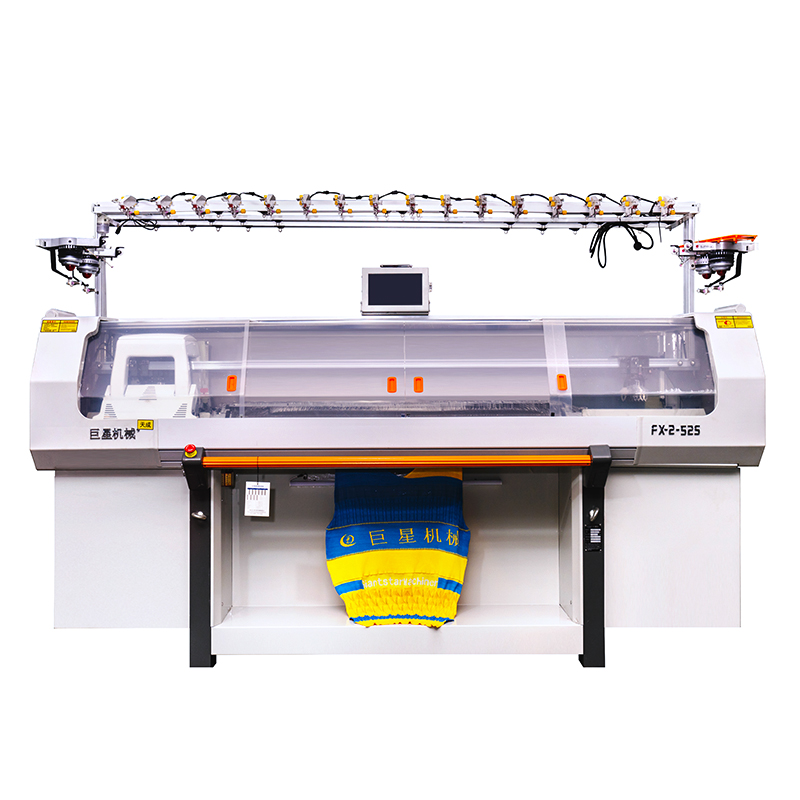
A computerized flat knitting machine is a high-tech knitting equipment that integrates electronic technology, computer control, mechanical design, and textile technology. Unlike traditional manual knitting machines and semi-automatic flat knitting machines, computerized systems automate critical knitting processes such as needle selection, yarn feeding, stitch forming, and pattern weaving through computer programming. This automation dramatically improves production efficiency, reduces labor costs, and ensures the consistency and stability of product quality. The term "system" in the context of computerized flat knitting machines refers to a complete set of cams and electronic needle selectors capable of completing a single knitting action—such as knit, tuck, or transfer—during a single pass of the carriage. The number of systems on a machine directly determines how many knitting actions can be performed simultaneously during each carriage traverse. Modern flat-bed knitting machines typically feature two needle beds arranged in an inverted V-shape, with cams that enable sophisticated patterning including knit, miss, tuck, and transfer operations combined with advanced shaping capabilities. These machines range from simple mechanical configurations through mechanical jacquard systems to fully electronic and computerized flat machines.
Single System Computerized Flat Knitting Machines
Single system computerized flat knitting machines feature one complete set of cams and needle selection mechanisms within the carriage. During each passage of the carriage across the needle bed, the machine can execute one knitting action—either knitting, tucking, or transferring—at a time. Key Characteristics of Single System Machines: Single system machines are typically more affordable in terms of initial capital investment. They feature simpler mechanical construction, which translates to reduced maintenance requirements and lower spare parts inventory costs. These machines are ideal for basic ribbing, collars, cuffs, and simple fabric structures. However, they have a slower production rate because only one row of knitting or transfer occurs per carriage stroke. For manufacturers producing relatively straightforward knitwear items without complex patterning requirements, single system machines offer a cost-effective entry point into computerized knitting technology. They remain particularly relevant for small-scale production runs, sample development, and specialized applications where production speed is not the primary constraint.
Double System Computerized Flat Knitting Machines
Double system computerized flat knitting machines feature two identical sets of cams housed within a single carriage. This configuration allows the machine to perform two knitting actions simultaneously during each pass of the carriage across the needle bed. Key Characteristics of Double System Machines: Double system machines represent the industry standard for versatile garment production. They offer significantly higher production speeds, with the capacity to form two rows of stitches in a single carriage stroke—effectively doubling the output for basic structures. These machines excel at handling complex patterns with multiple yarn types and sophisticated stitch constructions. The double system configuration is suitable for more complex patterns, as the machine head can carry two yarn feeders simultaneously. This capability enables efficient production of intricate jacquard designs, multi-color patterns, and complex stitch structures that would be impractical or prohibitively slow on single system equipment.
Detailed Technical Comparison
Production Speed and Throughput Analysis
The most significant distinction between single system and double system computerized flat knitting machines lies in their production speed and overall throughput capabilities.
| Performance Metric | Single System Machine | Double System Machine |
|---|---|---|
| Knitting Actions Per Carriage Pass | One | Two |
| Production Speed for Basic Structures | Baseline | 100% Faster |
| Production Efficiency for Complex Patterns | Baseline | 50-80% Increase |
| Output for Typical Sweater Patterns | Baseline | 70-100% Increase |
| Carriage Travel Distance Per Garment | Greater | Reduced |
| Cycle Time Per Garment | Longer | Significantly Shorter |
For typical sweater manufacturing applications, the productivity advantage of double system machines is substantial. The same piece of clothing can be produced in approximately half the time on a double system machine compared to a single system machine. This productivity differential becomes increasingly pronounced as pattern complexity increases. The efficiency gains of double system machines stem from their ability to execute multiple knitting actions simultaneously. While a single system machine must traverse the needle bed once for each knitting action, a double system machine can complete two actions in a single pass. This reduces the total carriage travel distance required per garment and substantially decreases cycle times.
Pattern Capability and Design Flexibility
Pattern capability represents another critical differentiation point between single system and double system machines.
| Pattern Capability | Single System Machine | Double System Machine |
|---|---|---|
| Basic Stitch Structures | Excellent | Excellent |
| Rib Fabrics | Excellent | Excellent |
| Simple Jacquard | Good | Excellent |
| Complex Jacquard | Limited | Excellent |
| Multi-Color Patterns | Limited | Excellent |
| Intarsia | Limited | Good |
| Transfer Patterns | Basic | Advanced |
| Cable Stitches | Basic | Advanced |
| Three-Way Technique | Limited | Full Capability |
Double system machines offer superior pattern flexibility due to their ability to carry multiple yarn feeders and execute complex stitch combinations. The two-system configuration enables sophisticated patterning techniques including multi-color jacquard, intricate transfer patterns, and complex stitch structures that would be challenging or impossible to produce efficiently on single system equipment. Single system machines, while capable of producing quality knitwear, are best suited for simpler designs and basic stitch constructions. They excel at producing rib fabrics, collars, cuffs, and straightforward garment panels where pattern complexity is not a primary requirement.
Stitch Quality and Consistency
Both single system and double system computerized flat knitting machines can deliver excellent stitch quality when properly maintained and operated. However, there are nuanced differences in their stitch formation characteristics. Double system machines, with their advanced electronic controls and precision cam systems, often achieve superior stitch consistency, particularly when producing complex patterns. The ability to precisely control two knitting actions simultaneously allows for better tension management and more uniform loop formation across the fabric width. Single system machines, while capable of producing quality fabrics, may exhibit slight variations in stitch density when producing complex patterns due to the sequential nature of their knitting actions. However, for basic stitch structures and simpler designs, the stitch quality difference between single and double system machines is often minimal.
Gauge Selection and Its Impact on Production
Understanding Machine Gauge
The gauge of a computerized flat knitting machine refers to the number of needles per inch on the needle bed. This specification fundamentally determines the fineness of the knitted fabric and the thickness of yarn that can be processed. Higher gauge numbers indicate finer knit fabrics with closer stitch spacing, while lower gauge numbers indicate thicker fabrics with more widely spaced stitches. Generally, flat machine gauges range from E5 to E14, with the main gauges being 5, 7, and 10. However, there are machines as coarse as E2.5 and as fine as E18 or even finer now being built. Double system machines commonly range from 5G for very coarse yarns and heavy sweaters to 18G for finer gauges and lighter apparel.
Gauge Selection Considerations
The choice of machine gauge significantly impacts both production capability and product quality. Key considerations include: Yarn Compatibility: Lower gauge machines (5G to 8G) accommodate thicker yarns and produce heavier, more substantial fabrics suitable for outerwear and chunky knitwear. Higher gauge machines (12G to 18G) process finer yarns and produce lighter, more delicate fabrics appropriate for fine-gauge garments and lightweight apparel. Fabric Density: Machine gauge directly influences fabric density and drape. Higher gauge machines produce denser, smoother fabrics with finer stitch definition, while lower gauge machines create more open, textured fabrics with pronounced stitch structure. Production Speed: Gauge affects production speed, with finer gauge machines generally operating at slower speeds due to the increased number of needles and more precise yarn handling requirements. Application Suitability: Different gauges are suited to different product categories. For instance, a machine optimized for high-speed double system flat knitting for sweater manufacturing might feature a 7G or 8G gauge with a 230cm bed to handle medium-weight yarns and produce sweater bodies at maximum throughput.
Application Industries and Product Suitability
Apparel and Fashion Garments
Computerized flat knitting machines have been widely used in the production of various knitted products, including fashion clothing, sportswear, and home textiles. Double system machines dominate high-volume apparel production due to their superior speed and pattern capabilities. Sweater Manufacturing: Double system machines excel at producing full-fashioned sweater panels with complex patterning, including jacquard designs, cable stitches, and multi-color patterns. The productivity advantage of double system machines is particularly valuable in sweater production, where pattern complexity and production volume are both significant considerations. Sportswear and Activewear: The growing demand for customized sportswear products has driven adoption of computerized flat knitting machines, with double system configurations preferred for their ability to produce complex, performance-enhancing stitch structures. Fashion Knitwear: The flexible programming capabilities and fast pattern switching functions of computerized flat knitting machines enable rapid adaptation to different styles and specifications, helping manufacturers shorten production cycles and reduce inventory pressure.
Technical Textiles
The expansion of technical textiles requiring advanced knitting capabilities represents a significant growth area for computerized flat knitting machines. Applications now span footwear, furniture, automotive interiors, medical devices, and smart textiles. Automotive Textiles: Flat knitting technology is increasingly used for automotive interior components, including seat covers, headliners, and trim panels. The ability to produce three-dimensional shaped fabrics without seams offers advantages in terms of comfort, durability, and aesthetic appeal. Medical Textiles: Seamless knitting technology has found applications in medical textiles, including compression garments, wound care products, and patient care items. The precision and consistency of computerized flat knitting machines are essential for medical applications where product quality and performance are critical. Industrial Materials: Computerized flat knitting machines are used to produce industrial textiles for filtration, reinforcement, and protective applications. The ability to knit with unconventional materials and create complex three-dimensional structures expands the potential applications of flat knitting technology.
Home Textiles
Computerized flat knitting machines produce a range of home textile products, including blankets, throws, cushion covers, and decorative fabrics. Double system machines offer the production capacity necessary for commercial home textile manufacturing while maintaining the pattern flexibility required for decorative and design-led products.
Comparative Maintenance and Operational Considerations
Maintenance Requirements
Maintaining the longevity of computerized flat knitting machines requires regular upkeep and systematic preventive maintenance.
| Maintenance Aspect | Single System Machine | Double System Machine |
|---|---|---|
| Mechanical Complexity | Lower | Higher |
| Maintenance Frequency | Less Frequent | More Frequent |
| Spare Parts Inventory | Lower | Higher |
| Technical Expertise Required | Moderate | Advanced |
| Lubrication Requirements | Moderate | Higher |
| Electronic Component Checks | Regular | Frequent |
Double system machines, with their more complex mechanical and electronic systems, typically require more frequent maintenance interventions. Regular inspection of needle conditions, lubrication levels, and tension adjustments are essential components of routine maintenance. Computerized flat knitting machines benefit from diagnostic tools that can help identify and isolate problems. These tools may include self-check routines or diagnostic modes that provide additional information about the machine's status. Regular inspection for signs of wear, loose components, or damage is essential for both single and double system machines.
Operational Considerations
Skill Requirements: Double system machines generally require operators with more advanced technical skills due to their greater complexity and more sophisticated patterning capabilities. Single system machines are more forgiving and may be suitable for operations with less experienced personnel. Setup and Changeover Time: Both machine types benefit from computerized controls that reduce setup and changeover times compared to manual equipment. However, double system machines may require more time for pattern programming and parameter adjustment due to their greater capability. Energy Consumption: Double system machines typically consume more energy than single system machines due to their more powerful drive systems and additional electronic components. However, the productivity gains often offset the increased energy costs on a per-garment basis.
Cost-Benefit Analysis
| Cost Factor | Single System Machine | Double System Machine |
|---|---|---|
| Initial Purchase Price | Lower | Higher |
| Energy Consumption | Lower | Higher |
| Maintenance Costs | Lower | Higher |
| Labor Cost Per Garment | Higher | Lower |
| Production Cost Per Garment | Higher | Lower |
| Return on Investment | Slower | Faster (High Volume) |
While single system machines have lower initial costs and reduced operational expenses, their slower production speeds result in higher labor costs per garment. For high-volume production environments, the productivity advantages of double system machines typically justify the higher capital investment through reduced per-garment production costs.
ROI Considerations
The return on investment calculation for computerized flat knitting machines depends on several factors: Production Volume: High-volume operations benefit more from double system machines due to the substantial productivity gains. Low-volume or specialized operations may find single system machines more cost-effective. Product Complexity: Operations producing complex patterns with multiple colors and intricate stitch structures benefit significantly from the enhanced capabilities of double system machines. Labor Costs: In regions with high labor costs, the labor savings from double system machines are more substantial, improving the ROI calculation. Market Positioning: Manufacturers targeting premium market segments with complex, high-quality products may find the superior capabilities of double system machines essential for competitive positioning.
Future Trends and Technological Developments
Intelligent and Connected Equipment
With the popularization of Industry 4.0 concepts, smart and connected computerized flat knitting machines have become the mainstream demand of the market. These machines can realize remote monitoring, fault early warning, parameter adjustment, and data analysis through industrial Internet platforms, helping manufacturers realize intelligent management of production processes, improve equipment utilization, and reduce production losses. The integration of AI technology enables machines to automatically optimize knitting parameters according to yarn characteristics and product requirements, further improving production efficiency and product quality. Both single and double system machines are benefiting from these technological advances, though double system machines typically incorporate more advanced control systems.
Flexible Production Capabilities
Against the background of the rise of fast fashion and personalized consumption, the market demand for small-batch, multi-variety, and fast-response knitting products is increasing. Computerized flat knitting machines, with their flexible programming capabilities and fast pattern switching functions, can quickly adapt to the production needs of different styles and specifications. Double system machines offer greater flexibility in terms of pattern complexity and production versatility, making them particularly well-suited to the demands of modern, responsive manufacturing environments.
Green and Low-Carbon Development
With the increasing global emphasis on environmental protection, green and low-carbon production has become an important development direction of the textile industry. Computerized flat knitting machine manufacturers are constantly optimizing product design, adopting energy-saving motors, environmentally friendly materials, and efficient knitting processes to reduce energy consumption and material waste. Modern double system machines increasingly incorporate energy-efficient drive systems and waste-reduction features. Upgraded servo motors and regenerative braking modules can recover kinetic energy during machine deceleration phases, decreasing overall power consumption.
Decision-Making Framework
Questions to Consider When Choosing Between Single and Double System Machines
Production Volume: What is your expected annual production volume? High-volume operations justify the investment in double system machines. Product Complexity: What types of patterns and stitch structures do you need to produce? Complex jacquard and multi-color patterns favor double system machines. Budget Constraints: What is your capital equipment budget? Single system machines offer a lower entry point for manufacturers with limited capital. Operator Skill Level: What is the technical expertise of your available workforce? Double system machines require more advanced operator skills. Future Growth Plans: Do you anticipate expanding your product range or increasing production volume? Double system machines offer greater scalability. Market Positioning: What quality level and price point are you targeting? Premium products may benefit from the superior capabilities of double system machines.
Conclusion
The choice between single system and double system computerized flat knitting machines represents a strategic decision that significantly impacts manufacturing capability, production efficiency, and competitive positioning. Single system machines offer a cost-effective entry point into computerized knitting technology, with lower initial investment and reduced operational complexity. They are well-suited to manufacturers producing simpler designs, operating at lower volumes, or working within constrained budgets. Double system machines deliver superior production speed, enhanced pattern capabilities, and greater operational flexibility. While they require higher initial investment and more sophisticated maintenance, their productivity advantages typically justify the additional cost for high-volume operations and manufacturers producing complex, high-value products. The global computerized flat knitting machines market continues to evolve, driven by technological innovation, changing consumer demands, and increasing emphasis on sustainable production. Manufacturers making informed equipment selection decisions based on thorough analysis of their specific production requirements, market positioning, and growth objectives will be best positioned to succeed in this dynamic industry environment.
Frequently Asked Questions
Q1: What is the main difference between a single system and a double system computerized flat knitting machine?
The primary difference lies in the number of knitting actions that can be performed during each pass of the carriage. A single system machine executes one knitting action per carriage traverse, while a double system machine executes two actions simultaneously, effectively doubling the production speed for basic structures and increasing efficiency by 50-80% for complex patterns.
Q2: Can a double system machine produce all the same products as a single system machine?
Yes, a double system machine can produce everything a single system machine can produce, and significantly more. Double system machines offer superior pattern capabilities, including complex jacquard designs, multi-color patterns, and intricate stitch structures that would be impractical or prohibitively slow on single system equipment.
Q3: How does machine gauge affect my production capabilities?
Machine gauge, measured in needles per inch, determines the fineness of the knitted fabric and the thickness of yarn that can be processed. Lower gauges (5G-8G) accommodate thicker yarns and produce heavier fabrics, while higher gauges (12G-18G) process finer yarns and produce lighter, more delicate fabrics. Your choice of gauge should align with your target product specifications.
Q4: Is a double system machine worth the additional investment?
For high-volume production environments and operations producing complex patterns, the productivity gains of double system machines typically justify the higher capital investment through reduced per-garment production costs. For low-volume or specialized operations producing simple designs, single system machines may offer better value.
Q5: What maintenance considerations differ between single and double system machines?
Double system machines have greater mechanical complexity and require more frequent maintenance, more sophisticated technical expertise, and a larger spare parts inventory. However, both machine types benefit from regular inspection, cleaning, and preventive maintenance to ensure optimal performance and longevity.