中文简体
 عربى
Content
- 1 1. Fundamentals of Computerized Flat Knitting Architecture
- 2 2. Defining “System Count” in Computerized Flat Knitting
- 3 3. Single-System Computerized Flat Knitting Machines
- 4 4. Double-System Computerized Flat Knitting Machines
- 5 5. Triple-System Computerized Flat Knitting Machines
- 6 6. Head-to-Head Technical Comparison
- 7 7. Fabric Capability and Pattern Structure Analysis
- 8 8. Gauge (GG) Selection and Compatibility Framework
- 9 9. Critical Hardware and Subsystem Evaluation
- 10 10. Total Cost of Ownership and Procurement Strategy
- 11 11. Frequently Asked Questions (FAQ)
- 11.1 FAQ 1: What is the main structural difference between a single-system and double-system computerized flat knitting machine?
- 11.2 FAQ 2: How does needle gauge (GG) affect the operational efficiency of double vs. triple-system machines?
- 11.3 FAQ 3: Can a double-system computerized flat knitting machine produce fully fashioned knitwear as effectively as a single-system machine?
- 11.4 FAQ 4: What types of yarns can be processed on computerized flat knitting machines?
- 11.5 FAQ 5: What routine maintenance procedures are required to ensure long-term machine accuracy?
- 12 12. Industry References
Computerized flat knitting machinery represents the technological core of modern industrial knitwear manufacturing. Over the past several decades, the textile production sector has transitioned from manual and semi-automatic mechanical flat beds to fully automated, digitally controlled flat knitting systems. This technological evolution has fundamentally redefined how sweaters, footwear uppers, technical textiles, scarves, and shaped fabric panels are engineered and mass-produced.
For textile mill owners, plant managers, and equipment procurement executives, selecting the appropriate machinery configuration is one of the most critical capital expenditure decisions. The market offers a wide spectrum of computerized flat knitting machines, categorized predominantly by their carriage system count, needle bed width, needle gauge, and cam box design. Among these variables, the system count—specifically single-system, double-system, and triple-system configurations—serves as the primary indicator of machine capability, production speed, patterning versatility, and initial investment cost.
Understanding the precise mechanical, operational, and economic differences between these system configurations is essential for optimizing factory throughput, managing operational overhead, and achieving high fabric quality across diverse order profiles.
1. Fundamentals of Computerized Flat Knitting Architecture
To evaluate system configurations effectively, it is first necessary to examine the primary structural components and operating principles of a computerized flat knitting machine.
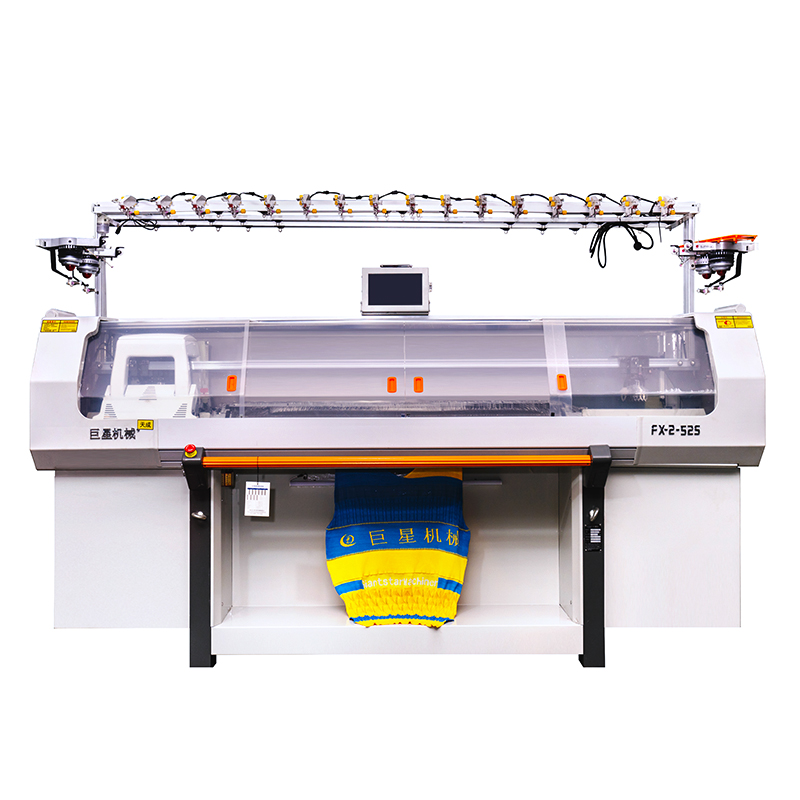
A standard computerized flat knitting machine utilizes two needle beds arranged in an inverted “V” formation, commonly known as a V-bed. The front bed and back bed hold hundreds of precision-machined latch needles, jacks, and sinkers. As the motorized carriage traverses horizontally across the length of the needle beds, its internal cam systems actuate the needles, raising and lowering them to catch yarn, form loops, transfer stitches, or drop loops according to digitized program commands.
Key integrated subsystems include:
- Electromagnetic Needle Selection System: High-speed electronic magnets or piezo actuators receive digital signals from the control unit to select individual needles on every traverse pass. This enables individual needle control for complex Jacquard, cable, and structural transfers.
- Carriage Drive and Servo Motor Assembly: A high-precision servo motor drives the carriage back and forth across the needle bed via a reinforced timing belt. Modern carriages feature dynamic stroke adjustment, allowing the carriage return distance to automatically adapt to the specific width of the knitted fabric panel, thereby reducing unnecessary travel time.
- Yarn Carrier and Feeder Mechanism: Yarn is routed from external creel stands through electronic tension sensors, top knots catchers, and motorized yarn carriers. The carriage pickup system engages specific yarn carriers to deliver yarn to active needles at precise intervals.
- Dynamic Stitch Control System: Independent stepping motors adjust the position of the stitch cams in real time. This allows the machine to alter stitch density instantly within a single course, enabling tight structure zones, loose fashioning areas, and variable density effects in a single panel.
- Fabric Take-Down Roller and Sinker System: Below the needle beds, main take-down rollers, auxiliary segment rollers, and electronically controlled presser feet or sinkers apply uniform downward tension. This ensures that newly formed loops clear the needle latches cleanly without requiring manual intervention.
The number of “systems” integrated into the traversing carriage directly governs how many complete knitting or stitch-transfer operations can occur simultaneously during a single carriage pass from one side of the needle bed to the other.
2. Defining “System Count” in Computerized Flat Knitting
In flat knitting terminology, a “system” refers to an independent functional unit within the carriage assembly that contains a complete set of needle-raising cams, stitch-forming cams, transfer cams, and associated yarn carrier drivers.
When a carriage passes over a needle, each system within that carriage can execute one complete knitting function (such as knit, tuck, or miss) or one complete transfer action (transferring a loop from front needle to back needle, or vice versa).
- Single-System Machine: Contains one set of knitting/transfer cams per carriage. It performs exactly one stitch action per needle per traverse pass.
- Double-System Machine: Contains two independent sets of knitting/transfer cams in tandem within a single carriage. It can execute two stitch actions per needle during a single carriage pass.
- Triple-System Machine: Houses three independent cam sets within a single carriage. It executes three distinct stitch actions per needle in one continuous traverse pass.
The theoretical production output scales directly with the system count, assuming carriage traverse velocity remains constant. However, actual production gains depend on pattern complexity, transfer frequency, yarn characteristics, and mechanical stroke dynamics.
3. Single-System Computerized Flat Knitting Machines
Mechanical Design and Operating Mechanics
Single-system computerized flat knitting machines represent the fundamental baseline of digital flat bed technology. The carriage houses a compact, lightweight cam box engineered to hold one complete system. Because the carriage mass is significantly lighter than multi-system alternatives, it can achieve high acceleration and deceleration rates at the end of each stroke.
During operation, as the carriage moves across the needle bed, every selected needle interacts with the single set of cams once. If a pattern requires a stitch to be transferred from the front bed to the back bed and then knitted on the subsequent course, a single-system machine must execute two separate carriage passes: one pass to perform the loop transfer and a second pass to lay the yarn and form the new loop.
Technical Advantages
- Lower Mechanical Complexity: With fewer moving cam components, internal solenoids, and stepper motors, single-system machines feature simplified internal mechanics. This reduces mechanical friction and lowers component wear.
- Compact Carriage Footprint: The narrow width of a single-system carriage reduces the distance required for the carriage to decelerate, turn around, and re-accelerate at the edges of the fabric panel. This compact turn-around zone maximizes stroke efficiency on narrow fabric panels.
- High Stitch Precision for Demanding Yarns: Single-system processing allows dedicated yarn tension monitoring per pass. Delicate filaments, high-twist yarns, and fragile cashmere fibers benefit from the reduced stress of single-pass loop formation.
- Capital Efficiency: Single-system machines require lower initial capital investment, making them accessible for short-run workshops, research institutions, and specialty sampling lines.
Operational Limitations
- Lower Production Speed: Because only one course of fabric is created per carriage pass, producing standard jersey or rib panels requires twice as many carriage passes as a double-system machine.
- Limited Multi-Color Productivity: In multi-color Jacquard designs, each color course requires an independent carriage pass, resulting in extended cycle times for complex multi-colored items.
Primary Industry Applications
Single-system machines are widely deployed in the production of collar strips, sleeve cuffs, rib trims, 3D knitted shoe uppers, orthopedic compression sleeves, high-end sampling development, and specialized technical textile fabrics where low volume and high stitch variation predominate.
4. Double-System Computerized Flat Knitting Machines
Mechanical Design and Dual-Cam Architecture
Double-system computerized flat knitting machines serve as the core workhorse across global commercial sweater and knitwear factories. The carriage features two full-capability systems (System 1 and System 2) positioned adjacent to each other within the same housing.
Each system is independently controlled by the central processing unit and can be programmed for specific, synchronized actions during a single pass:
- Dual Knitting Mode: System 1 knits course 1 while System 2 simultaneously knits course 2. This effectively doubles the fabric output per carriage traverse compared to a single-system machine.
- Simultaneous Transfer and Knit Mode: System 1 executes a loop transfer (e.g., front bed to back bed) while System 2 immediately follows behind on the same traverse pass to lay yarn and knit the newly transferred loop. This eliminates the extra turnaround pass required by single-system units.
Performance and Economic Value
The double-system configuration strikes an optimal balance between carriage weight, mechanical stability, and output volume. On standard plain jersey, rib structure, and basic structured patterns, a double-system machine offers approximately 80% to 100% higher production output than a single-system unit operating at identical carriage speeds.
Furthermore, double-system carriages accommodate an expanded array of yarn carriers (typically 8 to 16 yarn bars), allowing seamless switching between primary body yarns, plating yarns, elastomeric inlay yarns, and contrast color yarns.
Primary Industry Applications
Double-system machines are standard equipment for mass-producing fully fashioned sweater panels (front, back, and sleeves), cardigans, dresses, fashion scarves, structured jacquard fabrics, and medium-to-large production runs across fine, medium, and coarse gauges.
5. Triple-System Computerized Flat Knitting Machines
Advanced Engineering and Triple-Cam Configurations
Triple-system computerized flat knitting machines are designed for maximum structural productivity and complex, multi-functional stitch execution. The carriage houses three fully independent cam systems arranged sequentially within a single frame.
This configuration unlocks advanced operational sequences within a single carriage stroke:
- Triple Knitting: System 1, System 2, and System 3 knit three consecutive courses of fabric in a single pass across the needle bed.
- Complex Structure Execution: System 1 transfers loops, System 2 knits the base structure, and System 3 lays an inlay yarn or executes a secondary tuck stitch—all in one pass.
- High-Efficiency Intarsia and Jacquard: When knitting complex multi-colored Jacquard patterns, three separate color yarns can be inserted into the fabric matrix during a single traverse pass, drastically reducing the total carriage cycles required per garment.
Technical and Operational Considerations
While triple-system machines deliver high output rates, they introduce technical variables that factory management must consider:
- Increased Carriage Weight: The elongated carriage frame and additional cam assemblies increase overall carriage weight. This requires higher servo drive torque and reinforced guide rails to manage momentum during high-speed direction changes.
- Expanded Turnaround Zone: Because the carriage is wider, it must travel further past the selvedge edge of the fabric to allow all three systems to clear active needles before reversing direction. On very narrow fabric panels, this wider turnaround zone can diminish the efficiency advantages of the third system.
- Maintenance and Technical Skill Requirements: Tuning and maintaining three synchronized cam boxes, associated needle selection units, and stitch motors requires experienced maintenance technicians and precise calibration.
Primary Industry Applications
Triple-system flat knitting machines excel in high-volume sweater manufacturing facilities, complex Intarsia knitwear production, heavy coarse-gauge winter outerwear, multi-layer technical fabrics, and fully integrated garments where minimizing course cycle times is vital for profitability.
6. Head-to-Head Technical Comparison
To clarify the mechanical and operational distinctions among single, double, and triple-system machines, the following comparative breakdown evaluates key operational metrics.
| Performance Metric | Single-System Machine | Double-System Machine | Triple-System Machine |
|---|---|---|---|
| Cam Systems per Carriage | 1 System | 2 Systems | 3 Systems |
| Courses Knitted per Pass | 1 Course | Up to 2 Courses | Up to 3 Courses |
| Relative Production Speed | Baseline (1.0x) | High (~1.8x - 2.0x) | Very High (~2.5x - 2.8x) |
| Carriage Size & Weight | Compact & Lightweight | Medium Width & Mass | Wide & Heavy |
| Carriage Turnaround Distance | Minimal | Moderate | Extended |
| Simultaneous Transfer & Knit | No (Requires 2 Passes) | Yes (1 Pass) | Yes (Multiple Configurations) |
| Mechanical Complexity | Low | Moderate | High |
| Maintenance Demand | Standard | Moderate | High / Specialized |
| Initial Capital Investment | Lower | Mid-Range | Higher |
| Optimal Production Profile | Sampling, Trims, Shoe Uppers | Sweaters, Standard Jacquards | High-Volume Sweaters, Intarsia |
7. Fabric Capability and Pattern Structure Analysis
The choice of carriage system count directly affects how efficiently specific stitch structures can be programmed and knitted on the factory floor.
Structural Pattern Execution Breakdown
- Plain Jersey and Rib Structures: Plain jersey, 1x1 rib, and 2x2 rib require simple continuous course knitting. Double and triple-system machines process these structures rapidly by forming two or three courses per stroke.
- Cable and Pointelle (Lace) Structures: Cable stitches require transferring loops across adjacent needles to cross yarn paths, while pointelle requires transferring loops to create decorative openings. A single-system machine must pause knitting to perform transfers across separate carriage strokes. A double or triple-system machine completes the transfer with the lead system and immediately knits the new course with the trailing system, maintaining continuous production momentum.
- Multi-Color Jacquard: Jacquard fabrics utilize multiple colored yarns per row. On a double-system machine, two colors are laid per pass; on a triple-system machine, three colors are laid per pass. This reduces total knitting time on multi-color designs by up to 33% compared to double-system units.
- Intarsia Knitting: Intarsia creates solid blocks of color without floating yarns across the back of the fabric. Triple-system machines equipped with specialized intarsia yarn carriers can insert up to three distinct color fields per traverse, making them highly effective for geometric and artistic fashion designs.
8. Gauge (GG) Selection and Compatibility Framework
Along with carriage system count, needle gauge (GG) is a fundamental specification of any computerized flat knitting machine. Gauge defines the density of needles along the needle bed, expressed as the number of needles per inch.
$$\text{Gauge (GG)} = \text{Number of Needles per Inch of Needle Bed}$$
Choosing the correct gauge determines the acceptable yarn count range, fabric thickness, drape, and seasonal application of the finished garment.
Understanding Common Industrial Gauges
- Coarse Gauges (3GG, 5GG): Wide needle spacing designed for thick, bulky yarns such as heavy wool, spun acrylic, and multi-ply roving yarns. Used primarily for thick winter sweaters, heavy outerwear, and chunky knits.
- Medium Gauges (7GG, 9GG, 12GG): The most versatile range in global commercial manufacturing. 7GG and 9GG produce classic mid-weight fall/winter sweaters, while 12GG is the global standard for classic, year-round fine-knit sweaters and cardigans.
- Fine Gauges (14GG, 16GG, 18GG): High needle density engineered for fine, delicate yarns such as single-strand cashmere, combed cotton, silk blends, and technical synthetic filaments. Produces lightweight, soft, fluid fabrics for spring/summer lines, baselayers, and high-fashion items.
Gauge and System Count Synergy
Machine performance relies on matching needle gauge with the appropriate system count.
- Coarse Gauges (3GG - 5GG): Because coarse yarns are thick, tension forces on the needle bed are high. Double-system machines are frequently chosen for coarse gauges because they offer high output while keeping total carriage mass and yarn drag within manageable mechanical limits.
- Medium Gauges (7GG - 12GG): This category benefits significantly from both double and triple-system configurations. High-volume 12GG sweater production lines often utilize triple-system fleets to maximize output on high-volume basic orders.
- Fine Gauges (14GG - 18GG): Fine gauge needles are delicate, and loop formation requires precise control over tension and latch movement. Double-system machines excel in fine gauge applications by delivering high output while maintaining gentle, precise yarn handling.
Industrial Gauge and Yarn Compatibility Reference
| Machine Gauge (GG) | Needle Pitch (mm) | Recommended Yarn Count Range (Cotton System) | Recommended Yarn Count Range (Metric Woolen) | Primary End-Product Application |
|---|---|---|---|---|
| 3GG | 8.47 mm | 1.5s - 3s Ne | 2/3 - 2/6 Nm | Heavy chunky sweaters, outerwear, blankets |
| 5GG | 5.08 mm | 3s - 6s Ne | 2/6 - 2/12 Nm | Classic chunky knits, winter scarves, beanies |
| 7GG | 3.63 mm | 6s - 12s Ne | 2/12 - 2/20 Nm | Mid-weight sweaters, casual cardigans |
| 9GG | 2.82 mm | 10s - 16s Ne | 2/20 - 2/28 Nm | All-season sweaters, structured dresses |
| 12GG | 2.12 mm | 16s - 28s Ne | 2/28 - 2/48 Nm | Standard fine sweaters, uniforms, classic fashion |
| 14GG | 1.81 mm | 24s - 36s Ne | 2/48 - 2/60 Nm | Fine gauge tops, lightweight cardigans |
| 16GG | 1.58 mm | 32s - 48s Ne | 2/60 - 2/80 Nm | Ultra-light knits, luxury cashmere garments |
9. Critical Hardware and Subsystem Evaluation
When evaluating computerized flat knitting machinery, factory technical teams should assess several key subsystems alongside system count and gauge:
Electronic Needle Selection System
Modern flat knitting machines use multi-stage electromagnetic actuators or piezoelectric selectors. Piezoelectric selectors offer faster response times and generate less heat, enabling rapid, independent selection of every needle on every carriage stroke, even at carriage speeds exceeding 1.2 meters per second.
Dynamic Motorized Stitch Systems
Stitch density determines fabric weight, dimensions, and handfeel. Advanced machines feature individual stepping motors connected directly to each stitch cam. This allows dynamic adjustments down to fractions of a millimeter within a single course, enabling automatic panel shaping, localized reinforcement, and precise fashioning adjustments.
Motorized Active Yarn Feeders
Traditional carriages pull yarn carriers across the bed using mechanical latch blocks. Modern high-performance flat knitting machines use independently motorized yarn carriers driven by individual miniature servo motors mounted on the top rails. Motorized carriers move independently of the main carriage, positioning yarn with precise timing, eliminating carrier crash risks, and optimizing intarsia and plating performance.
Dynamic Sinker and Presser Foot Technology
To form consistent loops without relying solely on heavy downward fabric tension, modern needle beds incorporate programmable sinkers or presser feet. Electronically controlled sinkers hold down the fabric loop while the needle rises, preventing stitch climbing. This enables clean knitting of complex pockets, 3D structures, and partial knitting zones.
Control System and Software Integration
The central processing unit must process complex CAD file data rapidly and translate vector design commands into physical cam, magnet, and motor actions in real time. Modern control platforms feature touch-screen user interfaces, real-time error diagnostics, automatic stitch density compensation based on ambient temperature, and direct Ethernet/Wi-Fi connectivity for centralized management systems.
10. Total Cost of Ownership and Procurement Strategy
Investing in industrial computerized flat knitting machines requires a complete evaluation of the Total Cost of Ownership (TCO). Equipment buyers must look beyond the initial purchase price to consider long-term operating costs, maintenance demands, and product adaptability over the machine’s lifespan.
Capital Expenditure (CapEx) Considerations
- Single-System Units: Lowest capital cost per machine. Highly efficient for small factories, sampling units, or specialized trim production where budget constraints exist.
- Double-System Units: Moderate capital outlay with strong cost-to-performance efficiency. Offers a fast return on investment (ROI) in commercial sweater production due to high throughput and versatility.
- Triple-System Units: Higher capital investment per unit. Offers maximum financial return in factories with high-volume production orders, long product runs, or complex jacquard/intarsia requirements where time-per-panel directly determines factory profitability.
Operating and Maintenance Expenditure (OpEx)
- Energy Consumption: Multi-system carriages require larger servo motors and driving amplifiers, increasing electrical power consumption per machine hour. However, because multi-system machines complete panels faster, total energy consumed per finished garment is often comparable or lower.
- Wear-and-Tear Consumables: Needles, sinkers, and selector jacks are subject to mechanical friction. Multi-system machines cycle needles more frequently per carriage pass, requiring structured replacement schedules and high-quality synthetic lubricants to prevent thermal wear.
- Operator Skill and Maintenance Standards: Operating advanced double and triple-system machines requires trained programmers and technicians. Investing in ongoing workforce training minimizes needle breakage, reduces fabric defects, and prevents costly machine downtime.
Balanced Fleet Strategy for Manufacturing Plants
Rather than standardizing on a single machine type, many leading export textile manufacturers deploy a balanced machine fleet:
- 70% Double-System Machines (7GG, 12GG, 14GG): Serves as the primary production engine for mainstream order volume, classic sweater styles, and panel fashioning.
- 20% Triple-System Machines (12GG, 14GG): Dedicated to high-volume basic items, multi-color jacquards, and detailed intarsia production lines requiring maximum throughput.
- 10% Single-System Machines (or Multi-Gauge Specialized Units): Allocated to sample development, short-run custom orders, collar/cuff production, and technical product R&D.
This hybrid fleet model maintains overall plant flexibility, allows rapid adaptation to changing seasonal trends, and optimizes capital utilization across varying production cycles.
11. Frequently Asked Questions (FAQ)
FAQ 1: What is the main structural difference between a single-system and double-system computerized flat knitting machine?
The main structural difference lies in the number of independent cam sets housed inside the carriage. A single-system machine has one set of knitting/transfer cams and completes one stitch action per needle per carriage pass. A double-system machine has two cam sets in tandem within a single carriage, allowing it to complete two stitch actions per needle—or simultaneously transfer loops and knit—in a single carriage pass. This generally doubles production output on standard fabrics.
FAQ 2: How does needle gauge (GG) affect the operational efficiency of double vs. triple-system machines?
Needle gauge determines needle density and acceptable yarn thickness. On fine gauges such as 12GG to 16GG, triple-system machines provide high output on dense fabrics by inserting up to three courses per carriage pass. However, on fine gauges, precise yarn tension control is critical. Double-system machines are widely used across fine gauges because they balance high speed with reduced mechanical stress on delicate yarns. On medium to coarse gauges, system selection depends on pattern complexity and total panel width.
FAQ 3: Can a double-system computerized flat knitting machine produce fully fashioned knitwear as effectively as a single-system machine?
Yes, double-system machines produce fully fashioned knitwear efficiently. They utilize automatic needle narrowing and widening commands via electronic needle selection. System 1 can execute narrowing transfers while System 2 continues knitting, completing shaping steps in fewer carriage passes than a single-system unit. This makes double-system machines the standard choice for fully fashioned sweater manufacturing.
FAQ 4: What types of yarns can be processed on computerized flat knitting machines?
Computerized flat knitting machines process a wide variety of natural, synthetic, and blended yarns. Common spun yarns include wool, cashmere, cotton, acrylic, viscose, alpaca, and silk. Technical synthetic yarns include polyester filament, nylon, elastomeric spandex yarns, high-tenacity aramid fibers, and metallic effect threads. Proper matching of yarn count, yarn tensioning, and carriage feed speed to the specific machine gauge is essential to ensure defect-free fabric.
FAQ 5: What routine maintenance procedures are required to ensure long-term machine accuracy?
Key routine maintenance practices include:
- Daily: Cleaning lint and yarn dust from needle beds, carriage sensors, yarn carriers, and optical sensors using compressed air.
- Weekly: Checking automatic lubrication oil reservoirs, inspecting yarn tensioners, cleaning take-down rollers, and verifying selector magnet operation.
- Monthly: Inspecting needle latches, sinkers, and slider jacks for wear; cleaning carriage guide rails; checking timing belt tension; and calibrating dynamic stitch motor zeros.
12. Industry References
- Brackenbury, T. (1992). Knitted Clothing Technology. Blackwell Scientific Publications, Oxford.
- Spencer, D. J. (2001). Knitting Technology: A Comprehensive Handbook and Practical Guide (3rd ed.). Woodhead Publishing, Cambridge.
- Ray, S. C. (2012). Fundamentals and Advances in Knitting Technology. Woodhead Publishing India, New Delhi.
- Au, K. F. (Ed.). (2011). Advances in Knitting Technology. Woodhead Publishing, Cambridge.
- Hunter, L. (2004). Yarn Processing and Structure in Flat Bed Knitting. Textile Institute Manual of Textile Technology, Manchester.